



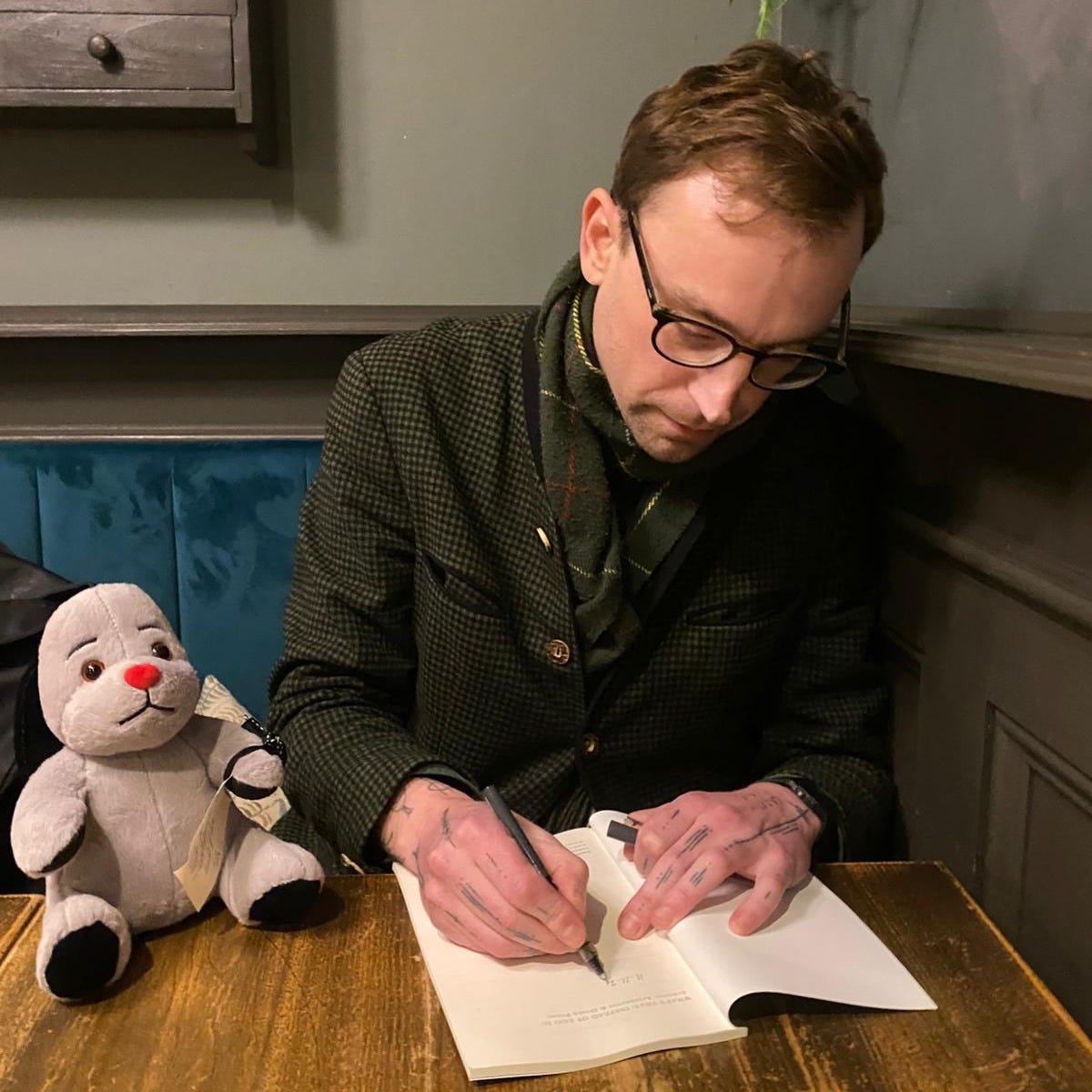
Gareth Stuart Farmer’s next book Writing Autism: The Anti-Biography of a Liminal Resident is forthcoming from Revol Press in 2026-27. Gareth is a writer, poet and academic whose work focuses on the lived experience of autism, with a mercurial approach that puts the reader into the neurodivergent experience in direct, unique and sometimes challenging ways.
My conversation with Gareth kicks off a new series of bonus episodes of Strange Exiles in association with Revol Press. For those who don’t know, Revol is an independent left-wing press dedicated to reviving countercultural dreaming, publishing new socialist theory and prose, and finding new voices on the contemporary left. You can find out more about Revol here. I was lucky enough to be published by them in 2024, and I now work with founder Mike Watson as a member of Revol’s editorial team.
Scroll to the bottom to view a video version, or subscribe to Strange Exiles on YouTube.
Recommendations from Gareth Stuart Farmer
We discussed some of Gareth’s academic work, a lot of which has focused on the poetry and critical theory of Veronica Forest-Thomson (more on her below). We touched on his podcasts, which you can find on Substack under the title ‘Poetic Particulars’. We also talk about his poetry — check out his latest collection What’s That: Instead of Ego II: Acrostic Aftermaths and Other Poems, published by Broken Sleep.
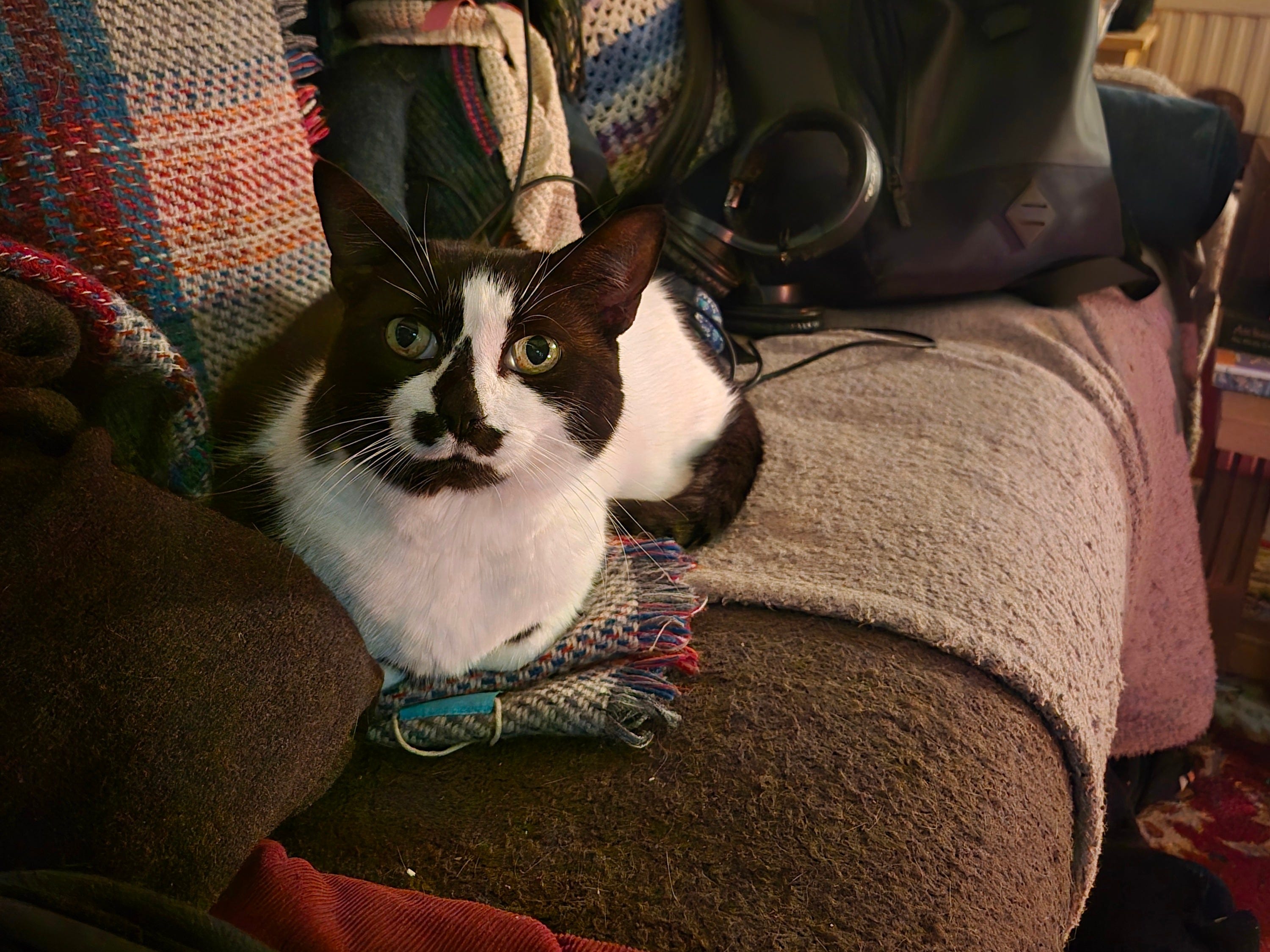
We actually kicked off with a brief discussion of his passion for woodworking, based on his very good-looking bookshelves, which you can see in the background on the video of this episode (see below). Also in the background throughout the episode is Gareth’s cat Veronica (named for the poet!), who strides into shot more than once.
We begin by discussing the now-defunct term for autism, once very commonly applied especially to ‘high-functioning’ autistic people, Asperger Syndrome. As Gareth points out, the term has fallen out of favour, not least because of some ties between Hans Asperger and the eugenics movement under the Nazi regime in World War Two. Gareth’s book Kerf (2022, from 87 Press) was his first poetic work exploring autism, and his woodworking practice. Gareth reads from this collection in the video below.
We go on to discuss his work at the University of Bedfordshire, in English Literature (specifically poetry), and linguistics. We discuss the work of Veronica Forrest-Thomson, who was the subject of Gareth’s PhD — he is also the executor for the estate of Forrest-Thomson’s work. Gareth examined her work, techniques and legacy in his book Poet on the Periphery. He also edited a major new edition of her seminal theory text on poetry, Poetic Artifice: A Theory of Twentieth-Century Poetry, which was reviewed here for the London Review of Books, and discussed here in The Guardian.
Gareth mentions Raymond Williams’ work on ‘structure of feeling’ — you can read more about that here in a piece from the Raymond Williams Society. He also references some of his recent essays, including ‘Experiences of autism in higher education’ (published in the collection Social Justice in Practice Education), and another on poetry and the welfare state (published in Literature and Institutions of Welfare).
We go on to talk about Gareth’s forthcoming book for Revol, which is in the editing stages now. Gareth read from it in Twickenham at The Gathering Dark, showcasing its unique approach to language, which places the reader in the centre of an experience of neurodivergent thought processes through use of the second person. The subject is ‘You’ not ‘I’, allowing readers to identify with and see through the eyes of an autistic person when considering issues of language, communication, and identity.


Gareth mentions Louis Althusser’s notion of ‘interpellation’ — some notes here explain the term and its usage, which is to do with how ideology and identity are formed and influenced by the experiences we go through, and the ideas, thought systems or normative practices we encounter and absorb. This article from Not Even Past explores the history of interpellation in Althusser’s writing.
Gareth also mentions Julie Kristeva’s notion of ‘abjection’ as a way to understand marginalisation and exile — you can read more about this in her book-length essay ‘Powers of Horror’. Later, we also introduce the concept of the ‘subaltern’ as a way to categorise people at the margins of society, first coined by Antonio Gramsci and later explored by Guyatri Spivak and others — there’s a good introduction to the term and its history available on the website for Global Social Theory.
For more in his approach to language, and the use of the second person in Writing Autism, check out the recent article below from the Revol Press blog, where Gareth talks about the books themes and intent, and how he approaches language in the text.

Gareth discusses how all of these theories interface with his work around neurodivergence in the workplace, and I bring up the book Neuroqueer Heresies by Nick Walker. I read this last year, and it was a great introduction to the ways in which neurodivergent experiences and identities can be reimagined, reinterpreted and re-interpellated into our understanding of the world, and how people with autism and ADHD can flourish within it.
At this point we also start to talk about the links between capitalism and mental health in the work of Mark Fisher, which he explores in Capitalist Realism, Postcapitalist Desire and other books. This leads into an exploration of Revol’s aims as a publisher, particularly in engaging with these themes.
Gareth mentions my book The Darkest Timeline, and also Adam Turl’s Gothic Capitalism as interesting but distinct approaches to some of these themes. Gareth also mentions the late Sean Bonney as an example of a poet who engaged with these themes from an anarchist perspective. The Poetry Project has a nice profile of Bonney by Ted Rees, looking at his work and the topics he explored.
We go on to talk about the so-called ‘crisis of over-diagnosis’ of mental health and neurodivergent conditions, which was talked about a lot in the British media — here’s The Guardian begging the question, some analysis of the Tory party’s Jeremy Hunt’s remarks on the subject, and some critique of Labour’s Wes Streeting for jumping on the bandwagon. Gareth is quite forthright in pushing back on the notion of an over-diagnosis crisis, but has some thoughts about how this overlaps with the more identitarian premise of making oneself unique or ‘special’ through identification with diagnoses, and the communities that grow up around people with specific conditions (particularly online).
We finished by talking more about ‘hidden disabilities’ and problems around representation, and how applying Kimberlé Crenshaw’s theories on intersectionality to think about neurodivergence can unintentionally lead to a competition between people with different conditions — leading to the commodification of those conditions to make “neurodivergent clickbait”. Gareth makes the excellent point that this false sense of “competition” between identities and communities is tied to the way capitalism forms identity — and that we should try not to think of rights and accommodations for disabled or neurodivergent people in this way.
He ends the conversation with some advice for the friends and family of neurodivergent people about respecting their unique lived experience, which is well worth hearing. Gareth’s book Writing Autism: The Anti-Biography of a Liminal Resident will be available for pre-order soon from revolpress.com.
Next on Revol X Strange Exiles: Rob Faure Walker
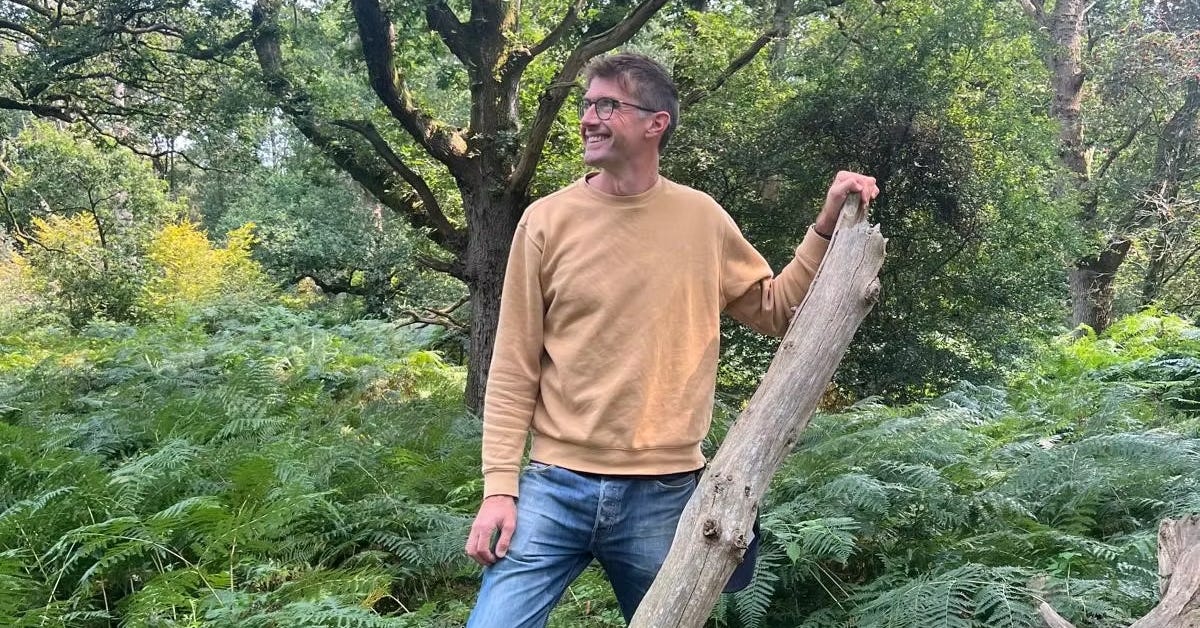
My next guest from Revol Press is Rob Faure Walker, an author, academic, and (more recently) ecotherapist specialising in ‘forest bathing’ — using nature to treat and manage mental and physical health conditions in a holistic way. His book Radical Jung: Emancipatory Politics and the Search for Meaning in the Ruins of Late Capitalism is available for pre-order, and will be released in Spring 2026.
Rob’s new book will explore how Carl Jung’s insights can guide us through the crises of digital era capitalism by integrating Jungian processes and archetypes with contemporary issues, offering a path towards collective healing and a reimagined relationship with radical politics, nature, and ourselves. Look out for my conversation with Rob in a few weeks time.


